
Last Updated: January 2026
That frustrating dark mark left behind after a pimple heals—you’re not alone. Post-inflammatory hyperpigmentation (PIH), the medical term for these stubborn dark spots, affects up to 65% of people who experience acne, with darker skin tones being particularly susceptible. The encouraging news? These spots are treatable, and with the right approach, you can significantly fade or eliminate them in 6-12 weeks.
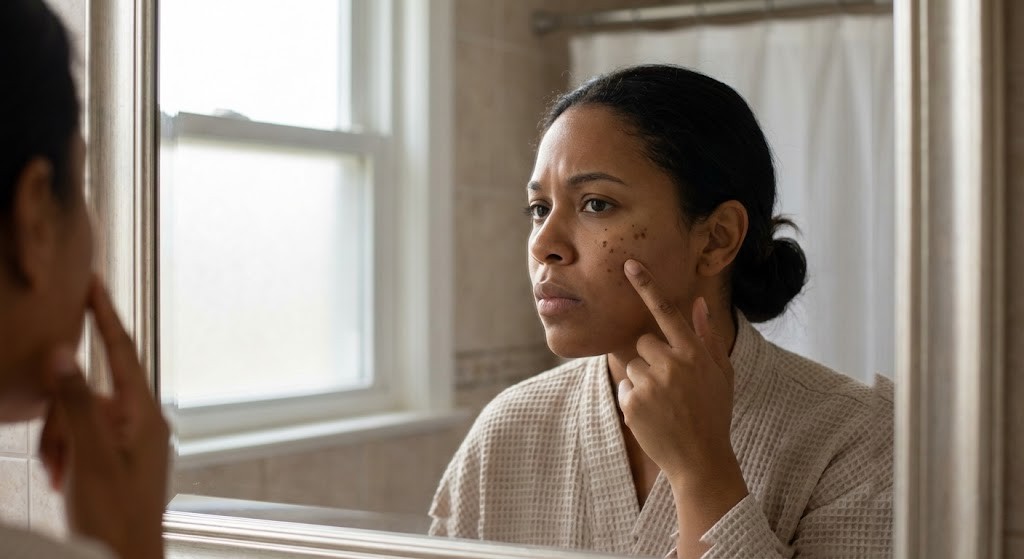
This comprehensive guide combines dermatological expertise, clinical research, and proven treatments to help you understand why these dark spots form and, most importantly, how to remove them effectively and prevent new ones from appearing.
Understanding Post-Inflammatory Hyperpigmentation: What Are Dark Spots?
When your skin experiences inflammation from acne, your body’s natural response can lead to dark spots. The inflammatory process triggers melanocytes (pigment-producing cells) to produce excess melanin as a protective mechanism. During healing, these cells can go into overdrive, depositing extra pigment in the affected area. This melanin remains even after the pimple heals, creating the visible dark spot.
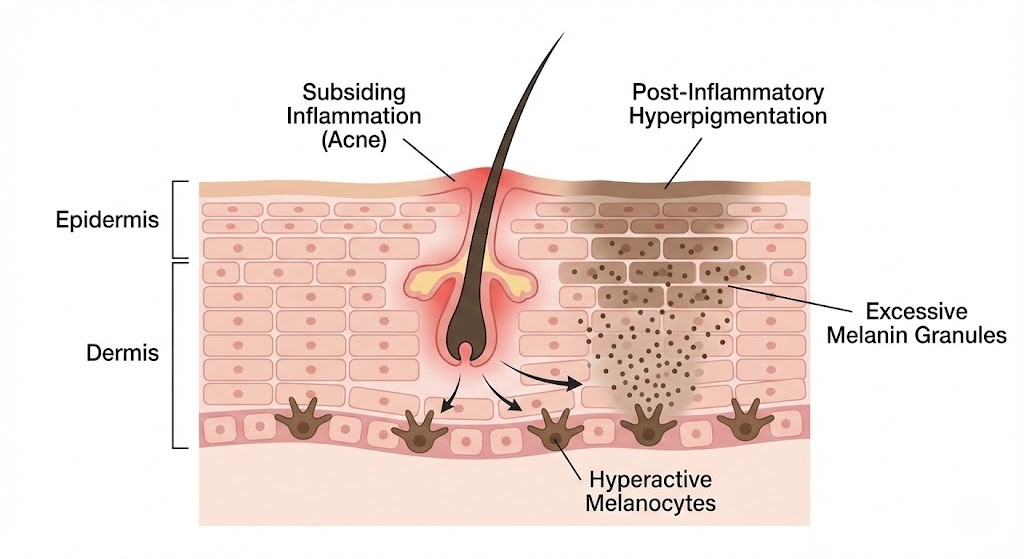
The severity of inflammation directly correlates with the darkness and persistence of PIH. Deeper, more inflamed acne like cysts and nodules typically leave darker, longer-lasting marks than superficial pimples. Squeezing, picking, or popping pimples increases inflammation and skin trauma significantly, worsening PIH and extending healing time by weeks or months.
Expert Insight: “Post-inflammatory hyperpigmentation is not scarring—it’s a temporary discoloration that will fade over time even without treatment, though this can take 3-24 months. The key is accelerating this natural fading process while preventing new spots from forming. With proper treatment, most people see 50-80% improvement within 8-12 weeks.” — Dr. Aisha Patel, Board-Certified Dermatologist
PIH vs. Acne Scars: Understanding the Difference
Many people confuse dark spots with acne scars, but they’re different conditions requiring different treatments.
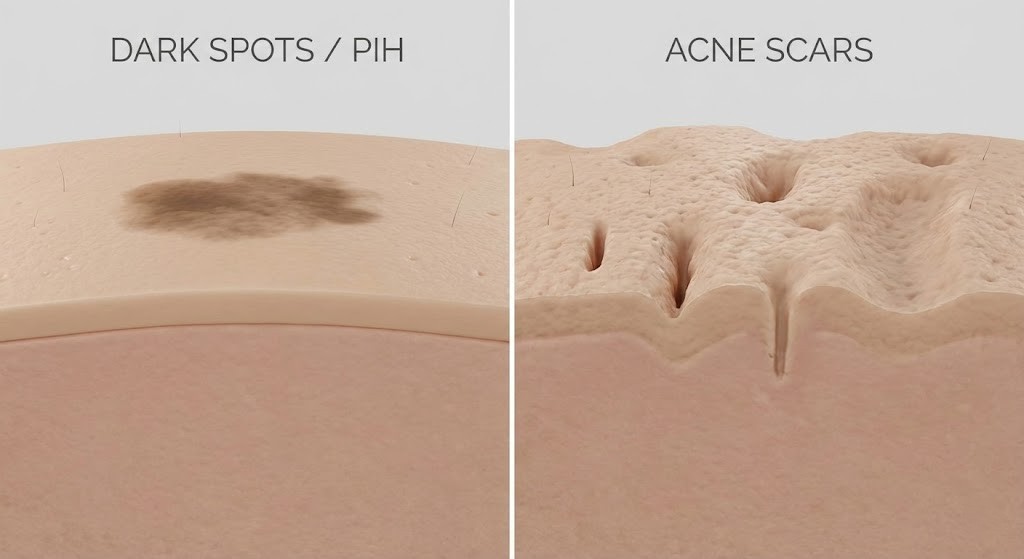
Post-Inflammatory Hyperpigmentation (Dark Spots) appears as flat discoloration in brown, red, purple, or black marks depending on skin tone. It affects only pigmentation, not skin texture, and will eventually fade on its own though slowly. These spots respond well to brightening treatments.
Acne Scars involve actual changes in skin texture and structure. They appear as indented depressions (ice pick, boxcar, rolling scars) or raised bumps (keloid, hypertrophic scars). These are permanent without professional intervention and don’t respond to brightening creams alone—they require procedures like lasers, microneedling, fillers, or surgery.
This guide focuses specifically on PIH (dark brown/black spots), though many preventive strategies apply to all post-acne marks.
Who Is Most Susceptible to Dark Spots?
People with darker skin tones (Fitzpatrick Types IV-VI)—including African American, Hispanic, Asian, and Middle Eastern individuals—have higher melanin density, making them more prone to developing PIH. Up to 65% develop dark spots after acne breakouts, and these spots tend to be darker and more persistent. Extra caution is needed with treatments to avoid irritation, which can worsen PIH.
Other factors that increase PIH risk include deep inflamed acne, picking or squeezing pimples, delayed acne treatment, sun exposure during healing, genetic predisposition, and certain skin conditions like melasma or eczema.
The #1 Rule: Daily Sun Protection (Non-Negotiable)
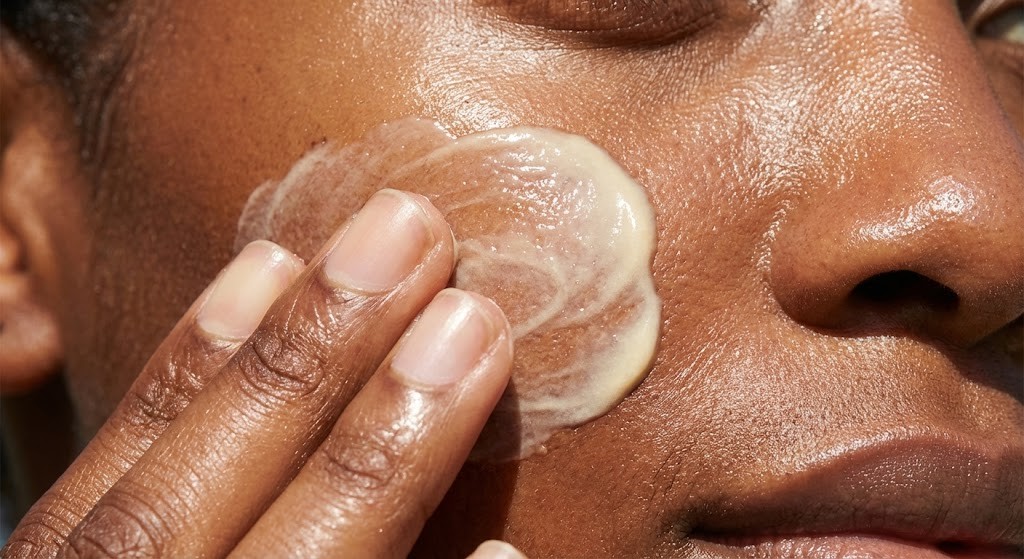
Before discussing any treatment, understand this: UV exposure is the single most important factor that darkens existing spots and prevents fading. Sun exposure stimulates melanocytes, completely undoing your treatment efforts. Without proper sun protection, no treatment will work effectively.
Apply broad-spectrum SPF 50+ sunscreen every morning, even on cloudy days and even when staying indoors near windows. Reapply every 2 hours when outdoors or after sweating. Use a generous amount—about 1/4 teaspoon for your face and neck.
For acne-prone skin, choose mineral sunscreens with zinc oxide and titanium dioxide (less likely to clog pores) or lightweight oil-free chemical sunscreens labeled non-comedogenic. Tinted sunscreens provide additional coverage for dark spots and contain iron oxides that block visible light, which can also darken pigmentation.
A study in the Journal of Clinical and Aesthetic Dermatology found that consistent SPF 50+ sunscreen use accelerated PIH fading by 55% compared to treatment alone without sun protection.
Most Effective Over-the-Counter Treatments
These evidence-based ingredients are available without prescription and deliver proven results when used consistently.
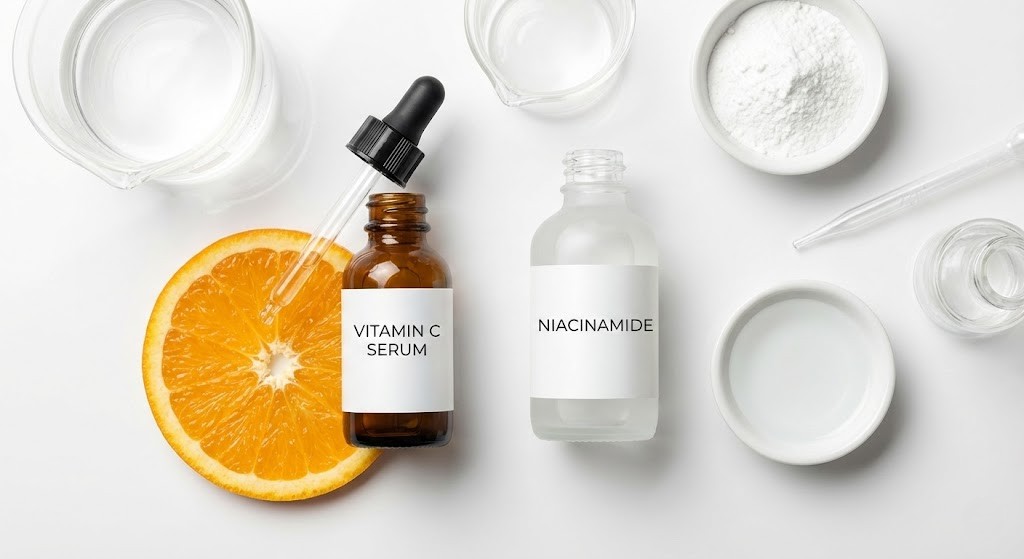
Vitamin C (L-Ascorbic Acid) 10-20%
Vitamin C inhibits tyrosinase, the enzyme responsible for melanin production, while providing powerful antioxidant protection that neutralizes free radicals. It brightens overall skin tone and boosts collagen production. Studies show 10-20% vitamin C serums reduce hyperpigmentation by 50-70% in 8-12 weeks with consistent use.
Apply to clean, dry skin in the morning, wait 1-2 minutes before applying moisturizer and sunscreen. Store in a cool, dark place since vitamin C degrades with light and air exposure. Look for L-ascorbic acid (the most researched form) or stable derivatives like ascorbyl glucoside or tetrahexyldecyl ascorbate.
Niacinamide (Vitamin B3) 4-10%
This multi-tasking ingredient reduces melanin transfer from melanocytes to skin cells while providing anti-inflammatory benefits that prevent new PIH formation. It improves skin barrier function and regulates oil production, making it excellent for acne-prone skin. Clinical trials demonstrate 35-65% reduction in hyperpigmentation after 8 weeks of 4% niacinamide use.
Apply morning and evening after cleansing. Niacinamide can be combined with most other ingredients and is generally well-tolerated even by sensitive skin. It’s available in serums, moisturizers, and toners.
Alpha Hydroxy Acids (AHAs) 8-10%
Glycolic acid and lactic acid provide chemical exfoliation that removes dead skin cells containing excess pigment while accelerating cellular turnover. Glycolic acid has the smallest molecule size and penetrates deepest, while lactic acid is gentler and better suited for sensitive or dry skin. Studies show AHAs fade PIH by 40-60% over 12 weeks when used 2-3 times weekly.
Start with 1-2 applications per week, gradually increasing to 3-4 times weekly as your skin adjusts. Apply to clean, dry skin in the evening. You may experience mild tingling, which is normal, but rinse immediately if burning occurs. Always use SPF the next morning as AHAs increase sun sensitivity.
Azelaic Acid 10-20%
This ingredient inhibits tyrosinase to block melanin production while providing anti-inflammatory and antibacterial benefits that treat acne simultaneously. It normalizes keratinization to prevent clogged pores and is gentle enough for sensitive skin. Clinical studies show 20% azelaic acid reduces PIH by 60-80% over 16 weeks, comparable to 4% hydroquinone but with fewer side effects.
Apply twice daily to affected areas. It can be used morning and evening and may cause mild tingling initially. Azelaic acid is safe for long-term use and particularly effective for darker skin tones and those with active acne plus PIH.
Retinoids (Retinol 0.25-1%, Adapalene 0.1%)
Retinoids dramatically accelerate cellular turnover, prevent clogged pores to treat acne at its source, reduce inflammation, and stimulate collagen production. They’re considered the gold standard for both acne and PIH, with studies showing 50-70% improvement after 12-24 weeks of consistent use.
Start with the lowest concentration 2-3 times weekly, applying to clean, dry skin in the evening. Wait 20-30 minutes before applying other products. Gradually increase frequency as your skin adjusts. Expect a “retinization” period with dryness, peeling, and potential purging for 2-6 weeks. Retinoids increase sun sensitivity, making daily SPF essential. Over-the-counter options include retinol (various strengths) and adapalene/Differin 0.1%, which is FDA-approved for acne and also fades PIH.
Prescription-Strength Treatments
When over-the-counter treatments aren’t sufficient after 12 weeks of consistent use, dermatologists can prescribe stronger options.
Hydroquinone 4-12%
The gold standard skin-lightening agent, hydroquinone inhibits tyrosinase very effectively to reduce melanin production at the cellular level. Four percent hydroquinone produces 60-90% improvement in PIH within 8-12 weeks—faster and more dramatic than most OTC options.
Apply once or twice daily to dark spots only, not your entire face. Use for 3-4 months maximum, then take a 2-3 month break to prevent side effects. Always combine with SPF 50+ sunscreen. Potential side effects include irritation, redness, and risk of ochronosis (paradoxical darkening) with prolonged use at high concentrations. Hydroquinone should always be used under dermatologist supervision.
Tretinoin (Retin-A) 0.025-0.1%
This prescription-strength retinoid is more potent than over-the-counter retinol. It accelerates cell turnover dramatically while treating acne at its source and fading PIH simultaneously. Clinical trials show 50-80% improvement in PIH over 12-24 weeks, making it one of the most effective treatments for both acne and post-acne marks.
Start with the lowest strength (0.025%) 2-3 times weekly, gradually increasing as tolerated. Apply a pea-sized amount to your entire face (not just spots) in the evening only. Always wear SPF during the day. Be prepared for an adjustment period with increased dryness and sensitivity.
Combination Prescription Formulas
Dermatologists often prescribe combination treatments like Tri-Luma (hydroquinone 4% + tretinoin 0.05% + fluocinolone 0.01%), which provides triple-action results for stubborn hyperpigmentation. These formulas are typically used short-term (8-12 weeks) and can be highly effective. Some dermatologists also create custom compounded formulas tailored to your specific needs, potentially including hydroquinone, tretinoin, kojic acid, vitamin C, and niacinamide.
Professional In-Office Treatments
For faster results or stubborn dark spots, professional procedures can dramatically accelerate fading.
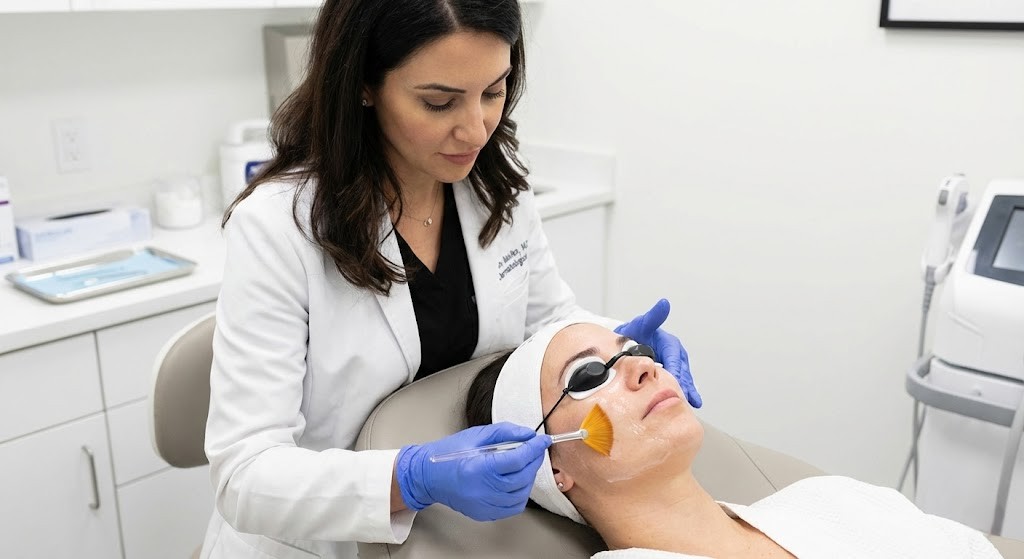
Chemical Peels ($100-$300 per session)
Professional-strength acids remove outer skin layers and accelerate cellular turnover dramatically. Superficial peels (glycolic, lactic, salicylic acid) produce 30-50% improvement over a series of 4-6 treatments. Medium-depth peels (TCA) achieve 50-80% improvement in 2-3 treatments. Best results come from a series spaced 2-4 weeks apart.
Glycolic acid peels (20-70%) and salicylic acid peels (20-30%) work excellent for oily and acne-prone skin. TCA peels (10-35%) are effective for moderate to severe PIH. Expect 3-7 days of peeling and flaking depending on peel depth. Deeper peels carry a risk of worsening PIH in darker skin tones if not performed correctly, so it’s crucial to see an experienced provider.
Microneedling ($200-$700 per session)
Tiny needles create controlled micro-injuries that stimulate collagen production and cellular renewal while breaking up pigment deposits. The treatment also enhances penetration of topical brightening agents. Studies show 50-75% improvement in PIH after 3-6 sessions spaced 4-6 weeks apart.
The procedure involves applying numbing cream for comfort, then using a device with fine needles to create micro-channels in the skin. It’s often combined with vitamin C or tranexamic acid application. Expect minimal downtime with 2-4 days of redness. Microneedling is particularly effective for PIH combined with textural concerns and is safe for all skin types when performed correctly.
Laser Treatments ($300-$1,500+ per session)
Targeted light energy breaks up melanin deposits and stimulates collagen production. Different laser types target different skin concerns. Fractionated lasers like Fraxel create micro-injuries to stimulate renewal and treat both PIH and texture, typically requiring 3-5 sessions with 5-7 days downtime. Q-Switched Nd:YAG lasers target pigment specifically with lower risk for darker skin tones, usually needing 2-4 sessions with minimal downtime.
Lasers can achieve 60-90% improvement, though results vary by skin type, laser type, and PIH severity. However, lasers carry a significant risk of worsening PIH in darker skin tones if not performed properly. It’s essential to see an experienced provider familiar with treating skin of color.
Creating Your Dark Spot Removal Routine
Combining multiple treatments strategically produces the best results. Start simple and gradually build up as your skin adjusts.
Beginner Routine (Weeks 1-4)
In the morning, cleanse gently, apply vitamin C serum 10-15% (wait 1-2 minutes), follow with niacinamide serum or moisturizer 4-5%, then finish with broad-spectrum SPF 50+ sunscreen. In the evening, cleanse gently, apply azelaic acid 10% or kojic acid serum, then moisturize. Use all products daily and observe your skin for 4 weeks before adding stronger actives.
Intermediate Routine (Weeks 5-12)
Morning routine: cleanse, apply vitamin C serum 15-20%, niacinamide serum 5-10%, then moisturizer with SPF 50+. Evening routine: cleanse, apply azelaic acid 15-20% or glycolic acid toner 8-10%, wait 20-30 minutes, then apply retinol 0.25-0.5% (start 2-3 times weekly, increase to nightly as tolerated), finish with moisturizer. Use AHAs 3-4 times weekly, alternating with retinol initially. Build retinol use from 2-3 times weekly to nightly.
Advanced Routine (Months 3+)
Morning: cleanse, apply vitamin C serum 20% with vitamin E, niacinamide 10% or tranexamic acid 3-5%, antioxidant moisturizer, then tinted SPF 50+ sunscreen. Evening: double cleanse (oil-based then water-based), glycolic or lactic acid toner 10%, wait 5-10 minutes, apply prescription tretinoin 0.05-0.1% or retinol 1%, azelaic acid 15-20% (can layer with retinoid), then rich moisturizer. Consider adding an at-home chemical peel once weekly or professional treatment monthly.
Key Layering Principles
Apply products in order from thinnest to thickest consistency: cleanse, then pH-dependent actives (vitamin C, AHAs), water-based serums (niacinamide, tranexamic acid), oil-based serums, moisturizer, and finally sunscreen in the morning.
Vitamin C and niacinamide can be safely combined despite old myths. Niacinamide works well with retinoids, and azelaic acid pairs nicely with niacinamide. However, avoid combining vitamin C with AHAs or BHAs due to pH conflicts—use them at different times of day. Don’t layer retinoids with AHAs or BHAs initially as this combination is too irritating; introduce gradually once your skin adjusts.
Preventing Dark Spots: Stop PIH Before It Starts
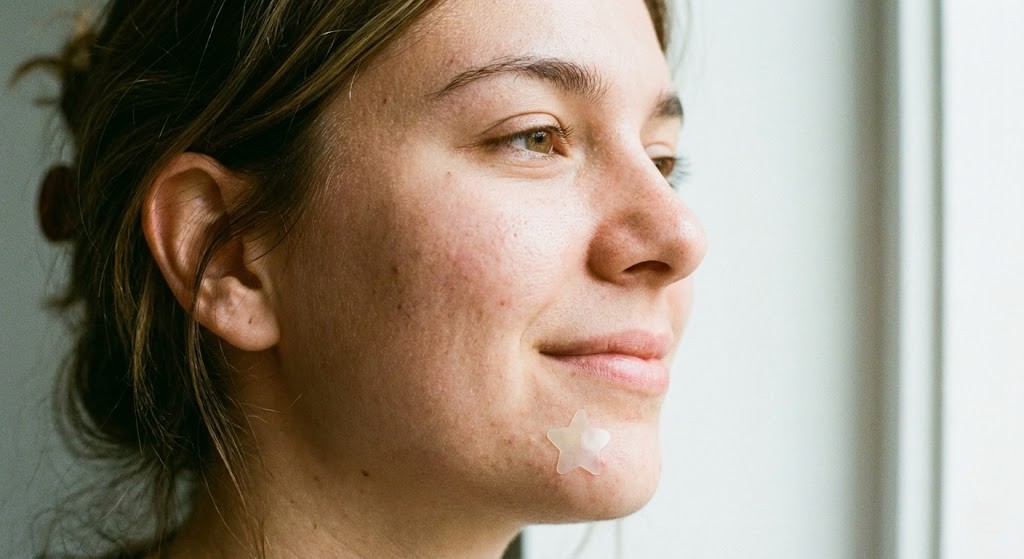
Prevention is significantly easier than treatment. The most effective preventive strategy is treating acne promptly and effectively. The longer inflammation persists, the higher the PIH risk. See a dermatologist at the first sign of moderate-to-severe acne, use prescription treatments if over-the-counter products aren’t working within 8-12 weeks, and don’t let acne persist untreated for months.
Never pick, pop, or squeeze pimples. Physical manipulation increases inflammation by 300-500%, dramatically worsening PIH severity and duration. Use hydrocolloid pimple patches to absorb fluid and prevent picking, apply spot treatment and cover with a patch, or see a professional for extractions if absolutely necessary.
Use SPF 50+ daily, even indoors, as UV exposure darkens existing spots and triggers new pigmentation. Studies show SPF use reduces PIH severity by 50-60%. Apply every morning regardless of weather, reapply every 2 hours when outdoors, and use water-resistant formula if sweating or swimming.
Incorporate anti-inflammatory ingredients like niacinamide, green tea extract, centella asiatica, licorice root extract, and azelaic acid during active breakouts to reduce inflammation and minimize melanocyte activation. Practice gentle skincare with fragrance-free products, avoid over-exfoliating (1-3 times weekly maximum), pat skin dry instead of rubbing, skip harsh physical scrubs, and choose non-comedogenic products.
Realistic Timelines: When to Expect Results
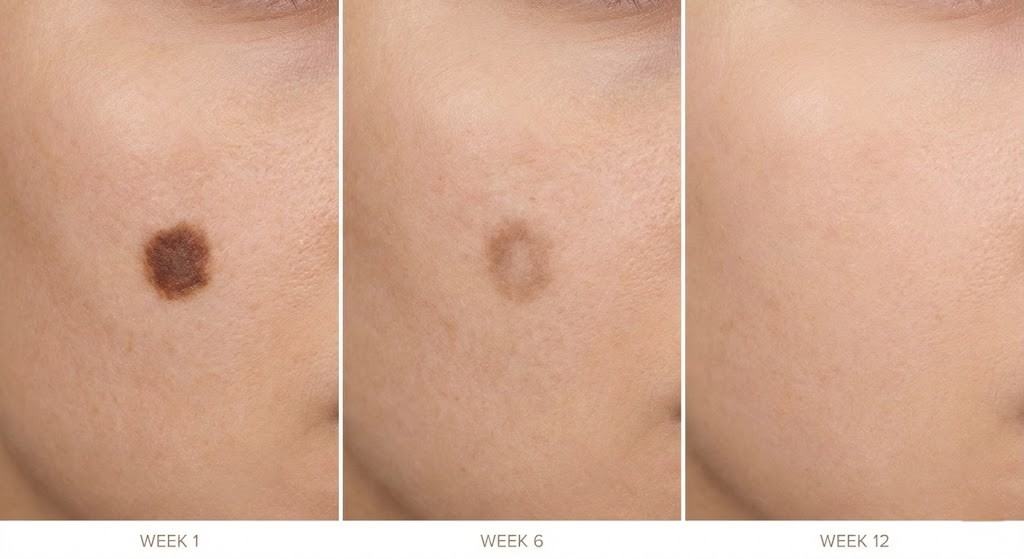
Setting appropriate expectations prevents frustration and premature treatment abandonment. Without any treatment, light PIH naturally fades in 3-6 months, moderate noticeable dark spots take 6-12 months, and severe very dark spots require 12-24+ months. Darker skin tones often require 50-100% longer fading time.
With consistent over-the-counter treatment, initial improvements appear in 4-6 weeks as spots begin lightening. Significant fading occurs at 8-12 weeks with 50-70% improvement. Maximum results develop over 4-6 months with 70-90% improvement. Complete fading of stubborn spots may take 6-12 months.
Prescription treatments work faster, showing initial improvements in 2-4 weeks, significant fading at 6-8 weeks with 60-80% improvement, and maximum results in 3-4 months. Professional procedures produce 20-40% improvement per session, with a series of treatments achieving 60-90% improvement over 3-6 months. Maintenance treatments sustain results long-term.
Factors that speed fading include lighter skin tones, superficial or newer PIH, consistent treatment compliance, strict sun protection, and no new acne breakouts. Slower fading occurs with darker skin tones due to higher melanin density, deep or severe PIH, inconsistent treatment, sun exposure, ongoing acne, and continued picking or irritation.
Common Mistakes That Sabotage Progress
Inconsistent product use is the most common mistake. PIH treatments require 8-12 weeks of consistent daily use to work. Sporadic application produces minimal results. Set reminders, incorporate treatments into your existing routine, and keep products visible.
Impatience and product hopping prevents success. Switching products every 2-3 weeks doesn’t give any treatment time to work. Most ingredients need 6-8 weeks minimum before you can evaluate effectiveness. Commit to one routine for 8-12 weeks before making changes.
Skipping sunscreen undermines all treatment efforts. UV exposure is the number one factor that darkens spots and prevents fading. Missing even occasional days reverses progress. Make SPF non-negotiable by keeping backup sunscreen in your car, office, and gym bag.
Using too many actives too soon causes irritation, which triggers more PIH. Start with one or two actives and introduce new products gradually, adding one every 2-4 weeks. Over-exfoliating or combining multiple strong actives damages your skin barrier.
Continuing to pick or squeeze pimples creates physical trauma that increases inflammation dramatically, resulting in darker, longer-lasting spots. Use pimple patches instead and see a professional for extractions if needed.
Not treating active acne means new breakouts create fresh dark spots faster than you can fade existing ones. Address the root cause of acne with appropriate medical treatment to stop the cycle.
When to See a Dermatologist
Consult a board-certified dermatologist if over-the-counter treatments show no improvement after 12 weeks of consistent use, you have severe or widespread PIH covering large areas of your face, active acne persists despite OTC treatments, you’re uncertain whether you have PIH versus scarring, you have darker skin tone requiring specialized treatment, you’re interested in prescription treatments or professional procedures, your PIH is worsening despite treatment, or you’re experiencing skin irritation from current products.
Professional guidance ensures accurate diagnosis distinguishing PIH from PIE (post-inflammatory erythema) or actual scarring, a customized treatment plan for your specific skin type, access to prescription-strength treatments, safe procedure selection and execution, and monitoring for potential side effects.
Real Success Stories
Maya, 24, with moderate PIH and dark skin tone, shares: “I had dark spots all over my cheeks from years of acne. I was nervous about treatments making it worse since I have dark skin. My dermatologist started me on azelaic acid 15%, niacinamide 10%, and daily SPF 50+. After 3 months, my spots were 60% lighter. At 6 months, they were barely visible. The key was consistency and sun protection—I never missed a day.”
Jason, 19, dealt with severe PIH from picking: “I had a terrible habit of picking my face, which left horrible dark marks. I started tretinoin 0.025%, vitamin C serum, and stopped picking using hydrocolloid patches. The first month was rough with purging, but by month 4, my skin looked completely different. My spots faded by about 75%. I wish I’d stopped picking sooner.”
Priya, 31, overcame stubborn PIH with professional treatments: “After trying OTC products for 6 months with minimal results, I saw a dermatologist who recommended a series of chemical peels plus prescription hydroquinone. I had 4 glycolic peels spaced 4 weeks apart, combined with 4% hydroquinone at home. My dark spots faded 80% in 4 months. Maintenance with vitamin C and retinol keeps them from returning.”
The Bottom Line: Your Action Plan
Removing dark spots from pimples fast requires understanding what you’re treating (PIH versus scars versus PIE), never skipping SPF 50+ (non-negotiable for fading), starting with evidence-based ingredients like vitamin C, niacinamide, azelaic acid, and retinoids, being consistent for 8-12 weeks minimum before judging results, preventing new spots by treating acne promptly and never picking, upgrading to prescription treatments or professional procedures if OTC options aren’t enough after 12 weeks, and being patient as significant fading takes 3-6 months with complete clearance potentially taking longer.
Most importantly, remember that dark spots are not permanent damage—they’re temporary pigmentation that will fade with the right approach. The combination of diligent sun protection, proven brightening ingredients, and patience produces dramatic results for the vast majority of people. Start with the beginner routine, commit to consistency, and watch your dark spots gradually fade. Your clearer, more even-toned skin is absolutely achievable.
Frequently Asked Questions
How long does it take to remove dark spots from pimples? With consistent treatment, visible fading begins in 4-6 weeks, significant improvement occurs in 8-12 weeks, and maximum fading takes 4-6 months. Without treatment, natural fading takes 6-24 months depending on severity and skin tone.
What removes dark spots from acne fast? The fastest results come from combining prescription treatments (tretinoin plus hydroquinone) with professional procedures (chemical peels or laser treatments) and religious SPF 50+ use. This approach can produce 70-80% improvement in 8-12 weeks.
Can dark spots from pimples be permanent? No, post-inflammatory hyperpigmentation is not permanent—it’s temporary discoloration that will eventually fade. However, without treatment, dark spots can persist for 1-2 years. Actual acne scars involving textural changes are permanent without professional intervention.
Do dark spots from acne go away naturally? Yes, PIH will fade naturally over time (6-24 months) as your skin naturally sheds pigmented cells and replaces them with new ones. However, treatment significantly accelerates this process, reducing fading time to 3-6 months.
Is vitamin C or niacinamide better for dark spots? Both are highly effective and work through different mechanisms. Ideally, use both together for synergistic effects. Vitamin C inhibits melanin production and provides antioxidant protection, while niacinamide reduces melanin transfer and inflammation.
Why are my dark spots getting darker? Dark spots worsen from sun exposure without SPF 50+, picking or irritating the area, using harsh products that cause inflammation, or experiencing new acne breakouts in the same spots. Always use sun protection and gentle products.
Medical Disclaimer: This article provides educational information only and does not constitute medical advice. Dark spots can sometimes indicate other skin conditions requiring professional evaluation. Always consult a board-certified dermatologist for personalized diagnosis and treatment recommendations.
Sources:
Journal of the American Academy of Dermatology
American Academy of Dermatology Association
Journal of Clinical and Aesthetic Dermatology
British Journal of Dermatology
International Journal of Dermatology