
Last Updated: January 2026
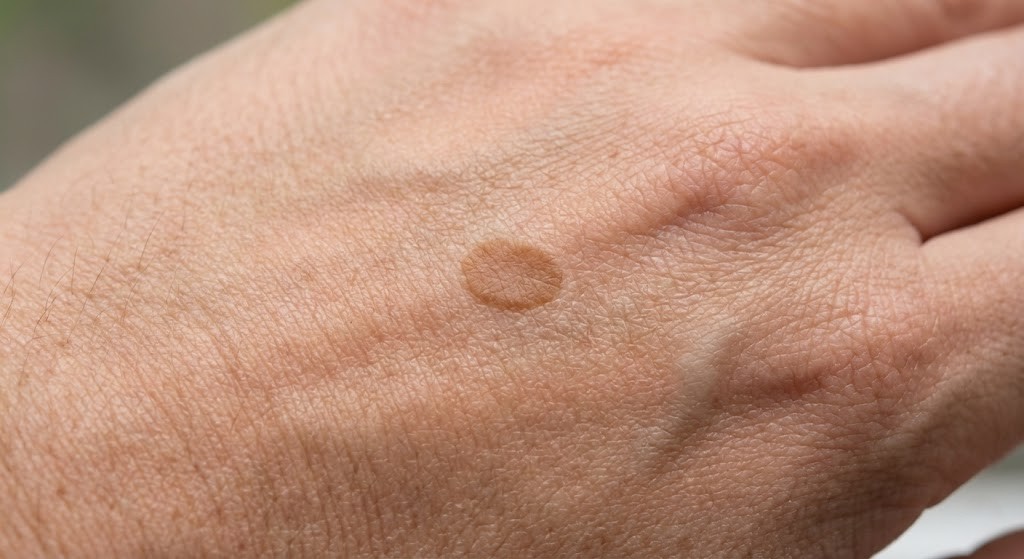
Those flat brown spots appearing on your hands, face, and shoulders aren’t just a cosmetic concern—they’re visible signs of sun damage accumulating over years. Age spots, medically known as solar lentigines, affect up to 90% of people over age 60 and can appear as early as your 30s or 40s, especially in those with sgnificant sun exposure. While these spots are harmless, understanding how to fade them naturally can help you achieve more even-toned, youthful-looking skin without harsh chemicals or expensive procedures.
This comprehensive guide combines dermatological science with proven natural remedies to help you understand what causes age spots, which home treatments actually work based on research, and how to prevent new spots from forming. Whether you’re dealing with a few spots or extensive sun damage, these evidence-based natural solutions can help you achieve clearer, more radiant skin safely and effectively.
Understanding Age Spots: What They Are and Why They Form
Age spots are flat, oval-shaped areas of increased pigmentation that typically range from light brown to black. They vary in size from freckle-sized dots to patches over half an inch across and most commonly appear on areas with the greatest sun exposure—your face, hands, shoulders, arms, and upper back. Despite their name, age spots aren’t caused by aging itself but rather by cumulative sun damage over time.
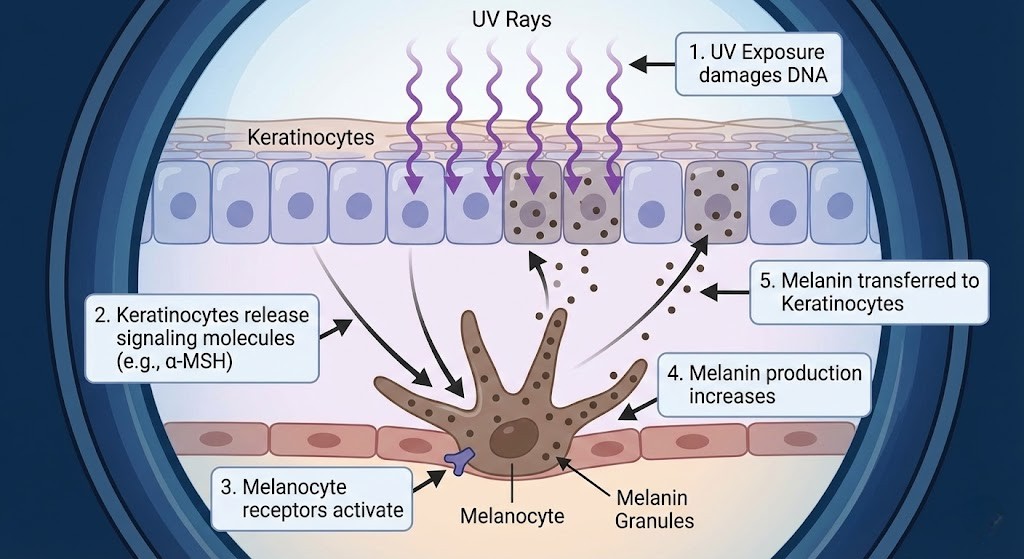
The Science Behind Age Spot Formation
Your skin contains melanocytes, specialized cells that produce melanin—the pigment responsible for skin color and tanning. When UV radiation from the sun hits your skin, it triggers melanocytes to produce more melanin as a protective response. This is why you tan after sun exposure. Over years or decades of sun exposure, some melanocytes become overactive and produce excessive amounts of melanin in localized areas, creating the concentrated pigment deposits we see as age spots.
Several factors accelerate this process. UV exposure from sunlight or tanning beds is the primary cause, with damage accumulating over decades before spots become visible. Fair skin contains less melanin naturally, providing less built-in sun protection and making individuals with lighter complexions more susceptible to developing age spots earlier and more extensively. A history of frequent sunburns, especially during childhood and adolescence, significantly increases your risk as each burn causes lasting damage to melanocytes. Aging itself plays a role as skin becomes less able to repair sun damage efficiently, and melanocyte function becomes increasingly irregular. Genetic predisposition influences both how susceptible you are to sun damage and how your skin responds to UV exposure.
Age Spots vs. Other Skin Discolorations
It’s important to distinguish age spots from other types of pigmentation to ensure you’re using appropriate treatments and to rule out anything requiring medical attention.
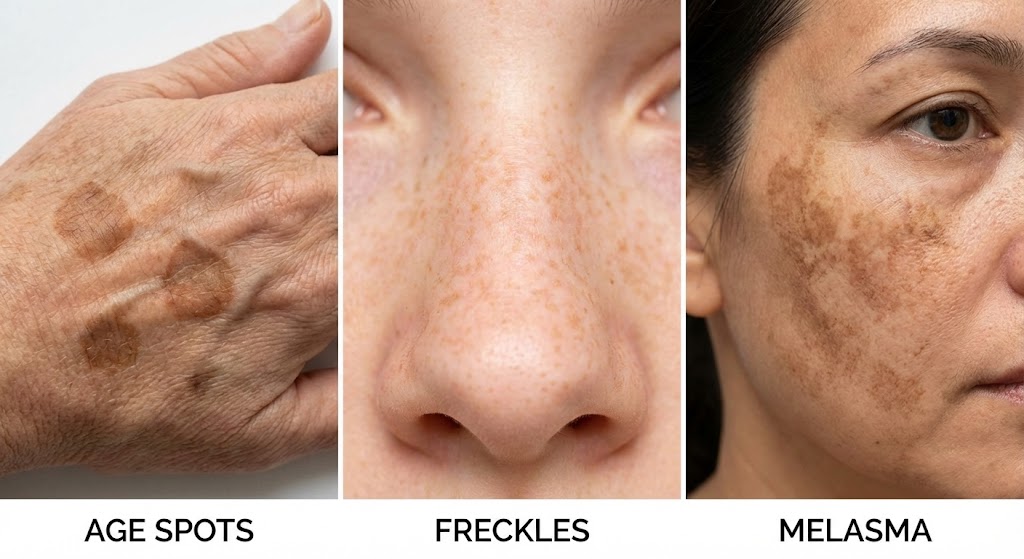
Age spots (solar lentigines) are flat with clearly defined edges, uniformly tan to dark brown in color, typically round or oval shaped, painless and don’t change texture, and appear on sun-exposed areas exclusively. Freckles (ephelides) are smaller than age spots, lighter in color (tan to red-brown), fade significantly in winter months, usually appear in childhood or adolescence, and are primarily genetic with sun exposure darkening them. Melasma causes larger patches of discoloration rather than distinct spots, appears symmetrically on the face (cheeks, forehead, upper lip), is triggered by hormones, sun exposure, or certain medications, more common in women, especially during pregnancy, and requires different treatment approaches than age spots.
Seborrheic keratoses are raised, not flat like age spots, have a “stuck-on” waxy appearance, can range from tan to dark brown or black, are completely benign but should be evaluated by a doctor, and don’t respond to topical treatments. Melanoma warning signs include spots with irregular, blurred, or jagged borders, multiple colors within one spot (brown, black, red, white, blue), asymmetrical shape (one half looks different from the other), changes in size, shape, or color over time, bleeding, itching, or crusting, and spots that appear in areas without sun exposure.
If you notice any suspicious changes in existing spots or development of new spots with concerning features, consult a dermatologist immediately for evaluation. Age spots themselves don’t become cancerous, but skin that’s accumulated enough sun damage to develop age spots is also at higher risk for skin cancer.
Most Effective Natural Remedies for Fading Age Spots
Natural remedies work gradually by gently exfoliating the skin’s outer layer, inhibiting melanin production, or providing antioxidants that protect against further damage. While these methods are significantly slower than professional treatments like lasers or chemical peels, they offer a gentler, more affordable approach with minimal risk of side effects when used correctly.
Lemon Juice: Natural Citric Acid Exfoliant
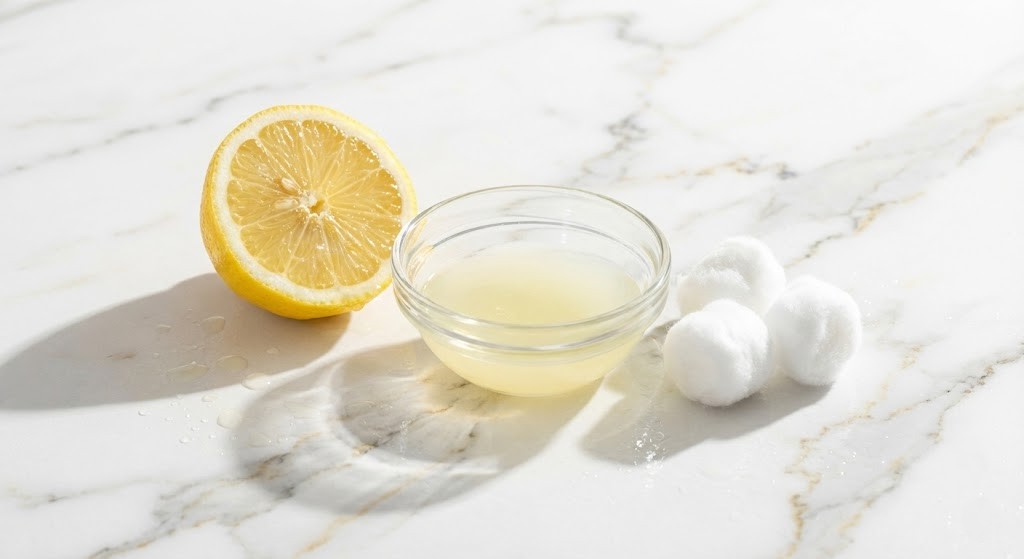
Lemon juice has been used for centuries as a natural skin brightener, and there’s science behind why it works. Citric acid, the primary active compound in lemon juice, provides gentle chemical exfoliation that helps shed pigmented skin cells while potentially inhibiting tyrosinase, the enzyme responsible for melanin production.
How to use it safely: Squeeze fresh lemon juice and dilute it with equal parts water to reduce acidity and irritation risk. Apply the diluted juice to age spots using a cotton ball, avoiding the surrounding skin when possible. Leave on for 10-15 minutes maximum, never longer as extended exposure can irritate skin. Rinse thoroughly with lukewarm water and immediately apply moisturizer. Use only in the evening, never before sun exposure, as citric acid makes skin photosensitive.
Important safety considerations: Lemon juice can cause significant irritation, redness, or burning, especially on sensitive skin. It dramatically increases sun sensitivity, potentially worsening pigmentation if you go outdoors without protection. Never use undiluted lemon juice or leave it on skin for extended periods. Always perform a patch test on your inner forearm before applying to your face. If you have sensitive skin or a history of reactions to acids, skip this remedy entirely.
Expected results: With consistent use 3-4 times weekly, you may notice modest lightening after 6-8 weeks, with more noticeable results taking 3-4 months. Lemon juice works best for very light or recent age spots and shows minimal effect on dark, established spots.
Apple Cider Vinegar: Acetic Acid Treatment
Apple cider vinegar contains acetic acid, which provides mild exfoliating properties similar to the alpha hydroxy acids used in professional skincare products. The acid helps dissolve the bonds between dead skin cells, promoting faster cellular turnover and potentially fading pigmented cells.
Application method: Mix one part raw, unfiltered apple cider vinegar with one part water (or two parts water for sensitive skin). Dab the mixture onto age spots with a cotton ball. Leave on for 5-10 minutes for the first few applications, gradually working up to 20 minutes as your skin adjusts. Rinse with cool water and apply moisturizer. Apply once daily in the evening, reducing frequency if irritation occurs.
What to expect: Apple cider vinegar is gentler than pure lemon juice but still carries some risk of irritation and increased sun sensitivity. You may notice a tingling sensation during application, which is normal, but discontinue use if burning or significant redness occurs. Results appear gradually over 2-3 months of consistent use, with best effects on lighter spots.
Aloe Vera: Soothing Melanin Inhibitor
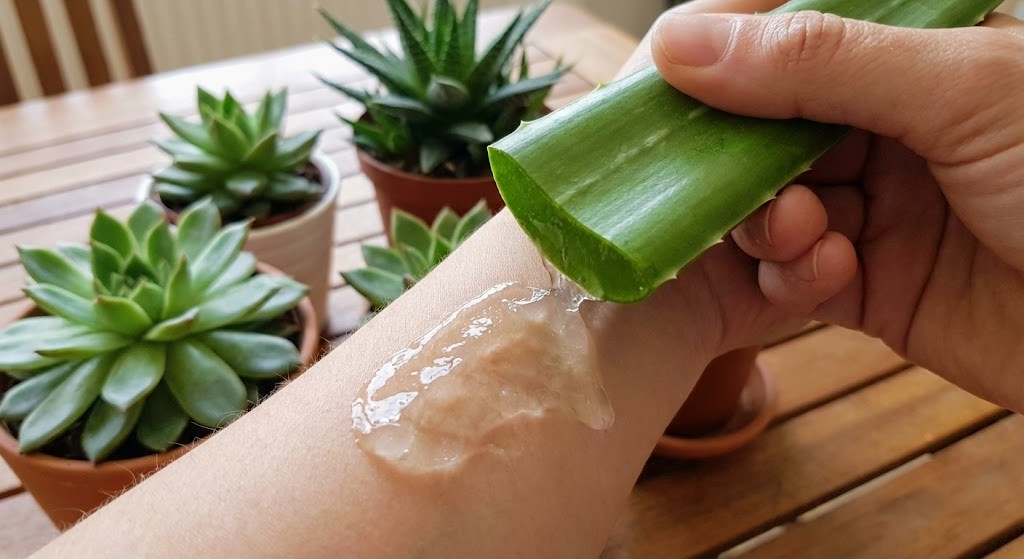
Aloe vera offers a gentler approach to fading age spots while simultaneously soothing and hydrating skin. Research suggests that aloin, a compound found in aloe vera, may inhibit melanin production, while the plant’s numerous beneficial compounds support overall skin health and healing.
How to use it: Extract fresh gel directly from an aloe vera plant for maximum potency, or use 100% pure aloe vera gel without added ingredients. Apply a generous layer directly to age spots and the surrounding area. Gently massage for 1-2 minutes to improve absorption. Leave on indefinitely—aloe vera is gentle enough for extended or even overnight application. For best results, apply twice daily, morning and evening.
Why it’s ideal for sensitive skin: Unlike acidic treatments, aloe vera rarely causes irritation and actually soothes existing irritation. It doesn’t increase sun sensitivity, so it can be used any time of day. The hydrating properties improve overall skin texture and health while targeting pigmentation. It can be safely combined with other natural remedies without increasing irritation risk.
Realistic timeline: Aloe vera works very gradually, requiring 3-6 months of twice-daily application to see noticeable fading. While slower than acidic treatments, it’s the safest option for sensitive skin and can be used long-term without concerns.
Vitamin C Serums: Antioxidant Brightening
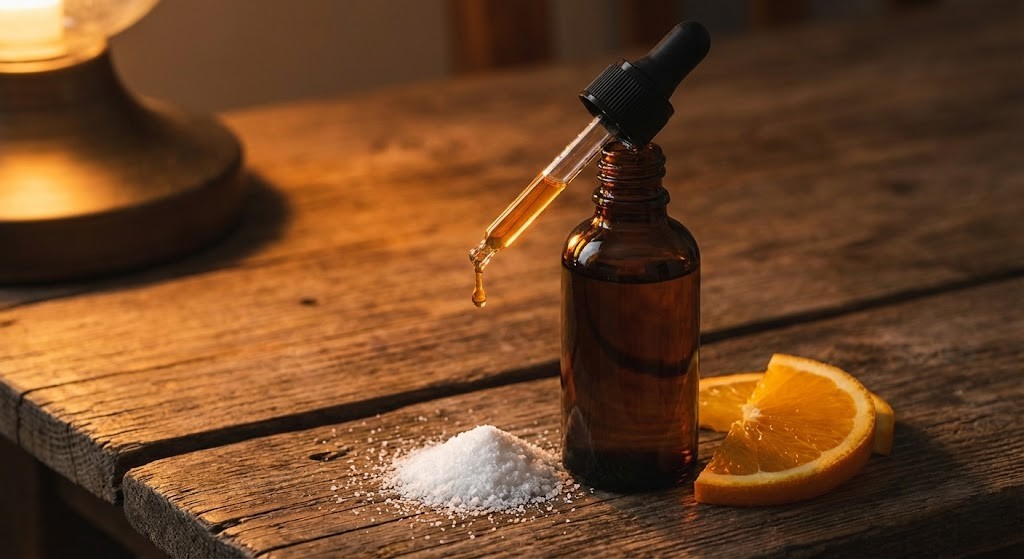
While not strictly a “home remedy,” vitamin C serums made from natural ingredients offer one of the most effective natural approaches to fading age spots. Vitamin C (ascorbic acid) inhibits tyrosinase enzyme activity, reducing new melanin production, provides powerful antioxidant protection against free radical damage that triggers pigmentation, brightens overall skin tone beyond just targeting dark spots, and stimulates collagen production for improved skin texture and firmness.
Natural DIY vitamin C serum: Mix 1/2 teaspoon vitamin C powder (L-ascorbic acid) with 2 tablespoons distilled water until fully dissolved. Add 1/4 teaspoon vegetable glycerin to help stabilize the mixture. Store in a dark glass bottle and refrigerate—vitamin C degrades quickly when exposed to light and air. Make fresh batches weekly for maximum potency.
Application: Apply 3-5 drops to clean, dry skin, focusing on age spots. Gently pat until absorbed (don’t rub). Wait 1-2 minutes before applying moisturizer and sunscreen. Use once daily, preferably in the morning so sunscreen follows.
Results and considerations: Vitamin C is one of the most effective natural brightening agents, with visible improvements possible in 4-8 weeks of consistent use. However, L-ascorbic acid can be irritating, especially at concentrations above 10-15%. Start with a low concentration and increase gradually. The DIY serum will oxidize quickly (turning brown/orange), indicating it’s no longer effective. Some people prefer purchasing a stable, professionally formulated vitamin C serum for convenience and reliability.
Green Tea Extract: Antioxidant Protection
Green tea contains powerful antioxidants called catechins, particularly epigallocatechin gallate (EGCG), which protect against UV damage and may help reduce existing pigmentation. While green tea won’t dramatically fade established age spots, it offers excellent preventive benefits and modest improvement in existing spots.
DIY green tea treatment: Brew 2-3 green tea bags in 1/4 cup boiling water for 10 minutes to create a concentrated solution. Allow to cool completely. Soak a clean cloth or cotton pads in the cooled tea. Apply the soaked cloth to areas with age spots for 10-15 minutes. Alternatively, freeze the green tea in ice cube trays and gently massage the frozen tea cubes over age spots for 1-2 minutes.
Daily application method: After brewing and cooling green tea, store it in the refrigerator for up to 3 days. Apply to age spots with a cotton ball twice daily, allowing it to air dry before applying moisturizer. This gentle method can be used indefinitely without concern for irritation.
Benefits beyond brightening: Green tea reduces inflammation that can worsen pigmentation, protects against ongoing UV damage that darkens existing spots, provides antioxidant support for overall skin health, and calms redness and irritation from other treatments.
Licorice Root Extract: Natural Tyrosinase Inhibitor
Licorice root contains glabridin, a compound that’s been shown in research to inhibit tyrosinase activity effectively. This makes it one of the most scientifically supported natural ingredients for fading hyperpigmentation.
How to use it: Purchase licorice root extract (available at health food stores or online). Mix 1-2 drops with 1 teaspoon of a neutral carrier like aloe vera gel or jojoba oil. Apply directly to age spots twice daily. Licorice extract is gentle and suitable for sensitive skin, rarely causing irritation.
Expected timeline: With consistent twice-daily application, modest lightening may be visible in 4-6 weeks, with more significant results taking 3-4 months. Licorice extract works well in combination with vitamin C for enhanced brightening effects.
DIY Face Masks for Age Spot Treatment
Face masks allow you to combine multiple beneficial ingredients for enhanced effects while providing a spa-like self-care experience.
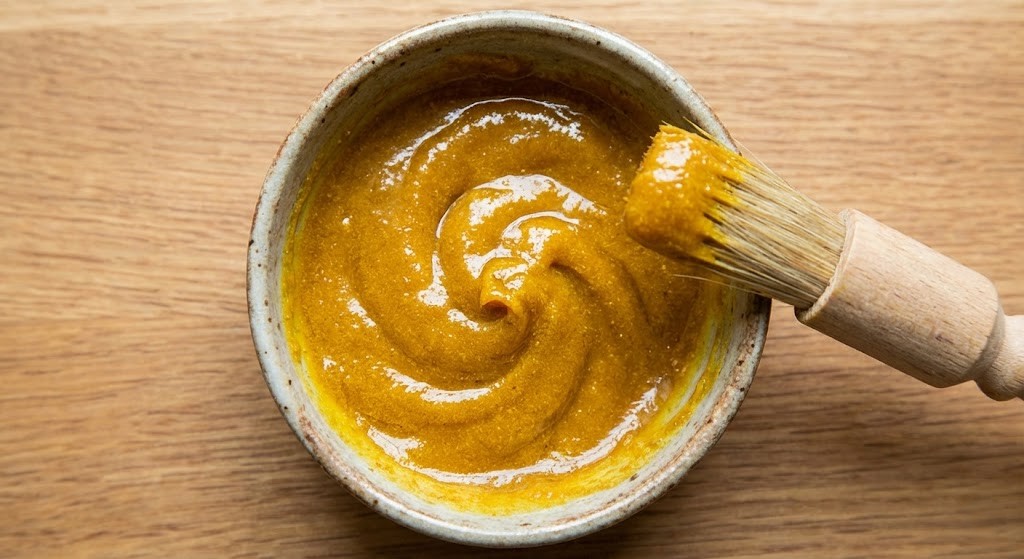
Turmeric and Honey Brightening Mask
Turmeric contains curcumin, a compound with anti-inflammatory and antioxidant properties that may help reduce pigmentation. Honey provides antibacterial benefits, moisturization, and gentle enzymatic exfoliation.
Recipe: Mix 1 teaspoon turmeric powder with 2 tablespoons raw honey until well combined. For dry skin, add 1 teaspoon plain yogurt or milk. Apply an even layer to the face, focusing on areas with age spots. Leave on for 15-20 minutes—turmeric can temporarily stain skin yellow, so don’t exceed this time. Rinse thoroughly with lukewarm water, using a gentle cleanser if needed to remove all turmeric residue. Apply moisturizer.
Frequency and precautions: Use 1-2 times weekly for best results without irritation. Turmeric will temporarily tint light skin yellow—this fades within a few hours. Avoid wearing white clothing during application. Perform a patch test before first use, as some people are sensitive to turmeric.
Yogurt and Oatmeal Exfoliating Treatment
This gentle mask combines lactic acid from yogurt (a natural alpha hydroxy acid) with physical exfoliation from oatmeal to promote cell turnover and fade pigmentation.
Recipe: Mix 2 tablespoons plain Greek yogurt (full-fat for dry skin) with 1 tablespoon finely ground oatmeal. Optional: add 1 teaspoon honey for additional moisture and 2-3 drops lemon juice for enhanced brightening (omit if you have sensitive skin). Let the mixture sit for 2-3 minutes so oatmeal absorbs liquid and softens. Apply to face in gentle circular motions, providing light exfoliation. Leave on for 15 minutes, then rinse with lukewarm water while gently massaging to exfoliate further.
Benefits: This mask is gentle enough for sensitive skin while still providing effective exfoliation. The lactic acid in yogurt helps fade pigmentation while the probiotics support skin barrier health. Oatmeal soothes inflammation and provides gentle physical exfoliation. Use 2-3 times weekly for best results.
Essential Prevention: Protecting Skin from Further Damage
Natural remedies for fading existing age spots are only half the equation. Without proper sun protection, new spots will continue forming, undoing your brightening efforts.
The Non-Negotiable: Daily Sunscreen
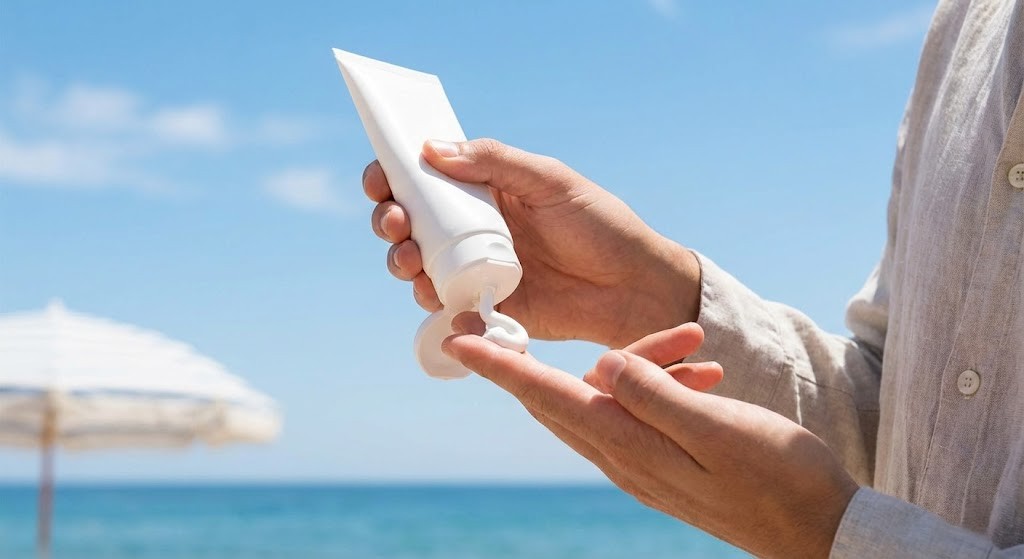
Sunscreen is the single most important preventive measure for age spots. Without it, even the most effective brightening treatments will fail as new sun damage continues darkening your skin.
Proper sunscreen application: Choose broad-spectrum SPF 50+ that protects against both UVA rays (which penetrate deep and cause pigmentation) and UVB rays (which cause burning). Look for mineral sunscreens with zinc oxide or titanium dioxide, which physically block UV rays and are less likely to irritate skin. Apply 1/4 teaspoon to your face and neck, which is more than most people use. Apply 15-20 minutes before sun exposure to allow proper bonding to skin. Reapply every 2 hours when outdoors, or immediately after swimming or heavy sweating.
Critical understanding: Sunscreen isn’t optional on cloudy days—up to 80% of UV rays penetrate clouds. Windows block most UVB rays but allow UVA rays through, so sun protection is needed even when driving or sitting near windows. If you’re using natural brightening treatments that increase photosensitivity (lemon juice, AHAs), sunscreen becomes even more critical. Consider wearing a wide-brimmed hat and seeking shade during peak sun hours (10 AM-4 PM) for additional protection.
Antioxidant-Rich Diet for Skin Health
What you eat significantly impacts your skin’s ability to protect itself from UV damage and repair existing sun damage. Antioxidants neutralize free radicals generated by UV exposure, reducing the inflammation and DNA damage that lead to age spots.
Key antioxidant nutrients and food sources: Vitamin C supports collagen production and brightens skin tone naturally, found in citrus fruits, strawberries, bell peppers, broccoli, and kiwi. Vitamin E works synergistically with vitamin C to enhance sun protection, present in almonds, sunflower seeds, avocado, spinach, and olive oil. Beta-carotene (converts to vitamin A) supports skin cell renewal and protects against UV damage, abundant in sweet potatoes, carrots, butternut squash, cantaloupe, and dark leafy greens.
Lycopene provides powerful antioxidant protection specifically against UV damage, found in tomatoes (especially cooked), watermelon, pink grapefruit, and papaya. Polyphenols from green tea offer multiple skin-protective benefits including reduced inflammation and UV damage protection—aim for 2-3 cups daily. Omega-3 fatty acids reduce inflammation that can worsen pigmentation, present in fatty fish (salmon, mackerel, sardines), walnuts, flaxseeds, and chia seeds.
Daily hydration: Drink 8-10 glasses of water daily to maintain skin moisture and support cellular function. Well-hydrated skin is more resilient and better able to repair sun damage.
Lifestyle Factors That Impact Age Spots
Several lifestyle choices significantly affect both your risk of developing new age spots and your skin’s ability to heal existing ones.
Quit smoking: Smoking accelerates skin aging through multiple mechanisms, reducing blood flow to the skin which impairs healing and nutrient delivery, increasing free radical damage that worsens pigmentation, depleting vitamin C critical for skin health, and causing premature wrinkling and dullness. If you smoke, quitting is one of the most impactful things you can do for your skin beyond sun protection.
Limit alcohol consumption: Excessive alcohol dehydrates skin, impairing its barrier function and healing capacity, depletes B vitamins essential for skin health, causes inflammation that can worsen hyperpigmentation, and dilates blood vessels which may worsen certain skin conditions. Moderate your intake to 1 drink per day for women, 2 for men, or less for optimal skin health.
Regular exercise: Physical activity improves blood circulation, enhancing nutrient and oxygen delivery to skin cells, reduces stress hormones that can trigger skin problems, supports the body’s natural detoxification processes, and promotes better sleep, critical for skin repair and regeneration. Aim for 30 minutes of moderate activity most days of the week.
Professional Treatments: When Natural Remedies Aren’t Enough
While natural remedies can produce modest improvements in age spots, professional treatments offer significantly faster and more dramatic results. Understanding your options helps you make informed decisions about when to seek professional help.
Chemical Peels for Accelerated Results
Professional chemical peels use higher concentrations of acids than available over-the-counter to remove outer skin layers and fade pigmentation. Superficial peels using glycolic acid (20-70%), salicylic acid, or mandelic acid remove the outermost layer of skin, requiring 4-6 treatments spaced 2-4 weeks apart, producing 40-60% improvement in age spot appearance, with minimal downtime (2-3 days of mild flaking).
Medium-depth peels using trichloroacetic acid (TCA) penetrate deeper for more dramatic results, typically requiring 2-3 treatments, producing 60-80% improvement, with 5-7 days of more noticeable peeling and redness. These are performed by dermatologists and require careful post-treatment care. Light peels cost $100-300 per session, while medium peels range from $1,000-2,000 per treatment.
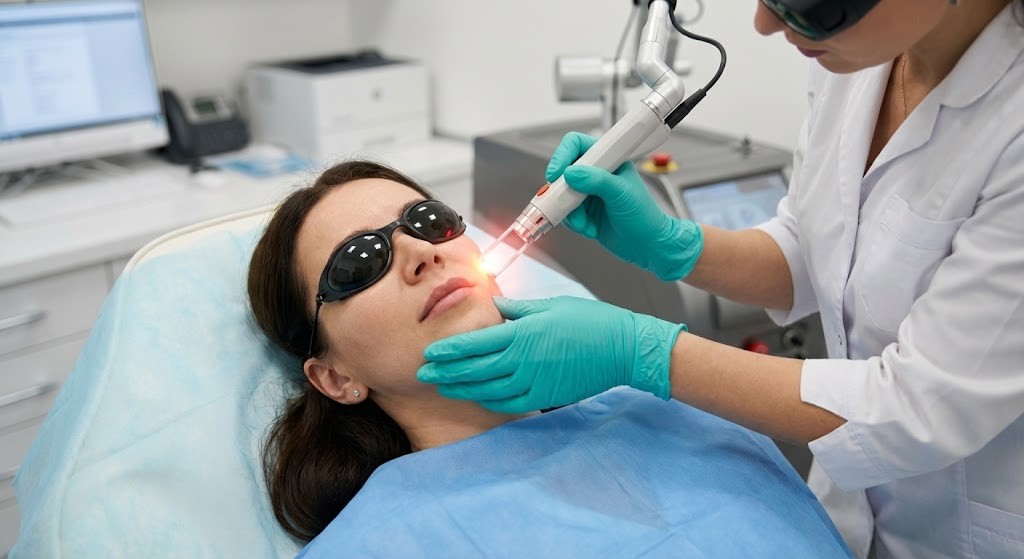
Laser and Light Therapies
Laser treatments offer the most dramatic and fastest results for age spot removal by using targeted light energy to break up melanin deposits. Intense Pulsed Light (IPL) uses broad-spectrum light to target pigmentation, requires 3-5 treatments spaced 3-4 weeks apart, costs $300-600 per session, works best on lighter skin tones, and produces 70-90% improvement in age spots.
Q-Switched lasers precisely target melanin with minimal damage to surrounding skin, typically require 1-3 treatments, cost $400-800 per session, are safe for darker skin tones, and can completely remove many age spots. Fractional lasers treat both pigmentation and overall skin texture simultaneously, require 3-5 treatments, cost $500-1,500 per session, and provide comprehensive skin rejuvenation.
Important considerations: Lasers carry risks including temporary hyperpigmentation (especially in darker skin tones), blistering or scarring if performed incorrectly, and incomplete pigment removal requiring multiple sessions. Always seek treatment from a board-certified dermatologist or experienced laser technician with expertise in treating your skin type.
Prescription Topical Treatments
For those wanting stronger results than natural remedies but preferring to avoid procedures, dermatologists can prescribe topical treatments. Hydroquinone 4% is the gold standard prescription brightening agent that inhibits melanin production very effectively, requires 3-4 months of use for maximum effect, must be used under medical supervision due to potential side effects, and needs periodic breaks to prevent ochronosis (paradoxical darkening).
Tretinoin (Retin-A) is a prescription retinoid that accelerates cell turnover dramatically, fades pigmentation while improving overall skin texture, requires 6-12 months for full effects, and increases sun sensitivity significantly. Combination prescriptions like Tri-Luma combine hydroquinone, tretinoin, and a mild steroid for enhanced results in treating stubborn pigmentation.
Creating Your Natural Age Spot Treatment Plan
Combining multiple natural approaches produces better results than any single treatment alone. Here’s how to create an effective routine.
Daily Morning Routine
Cleanse with a gentle, non-stripping cleanser. Apply vitamin C serum or DIY vitamin C treatment to face and hands. Wait 1-2 minutes for absorption. Apply aloe vera gel over vitamin C for added soothing and brightening. Apply moisturizer with antioxidants if desired. Apply broad-spectrum SPF 50+ sunscreen generously—this is your most important step. Reapply sunscreen every 2 hours if outdoors.
Evening Routine
Cleanse thoroughly to remove sunscreen and daily impurities. Apply lemon juice dilution or apple cider vinegar to age spots only (3-4 times weekly, not daily). Wait 10-15 minutes, then rinse. Apply licorice extract mixed with aloe vera to age spots. Apply rich moisturizer to entire face and hands. Once or twice weekly, use a brightening face mask (turmeric-honey or yogurt-oatmeal) in place of spot treatments.
Weekly Treatments
Perform gentle exfoliation 2-3 times weekly to remove dead skin cells and enhance product absorption. You can use a DIY yogurt-oatmeal mask for this purpose or a gentle physical exfoliator. Apply a concentrated brightening mask once or twice weekly for enhanced results.
Realistic Timeline and Expectations
Natural remedies require patience and consistency. With diligent daily application of multiple treatments plus religious sun protection, you may notice initial lightening after 6-8 weeks. More significant fading becomes visible at 3-4 months of consistent use. Maximum results from natural remedies typically appear around 6-8 months. Very dark or long-established age spots may only partially fade with natural treatments and could require professional intervention for complete removal.
Remember that preventing new age spots through sun protection is just as important as treating existing ones. Even the most effective brightening routine will fail if you continue accumulating sun damage.
When to Consult a Dermatologist
While age spots are generally harmless, certain situations warrant professional evaluation. Seek medical attention if you notice any spot that changes in size, shape, or color over time, develops irregular or blurred borders, shows multiple colors within one spot, begins bleeding, itching, or crusting, or appears in areas without sun exposure. Additionally, consult a dermatologist if you desire faster results than natural remedies can provide, have extensive age spots covering large areas, want confirmation that your spots are benign and not concerning, or experience irritation or adverse reactions from natural treatments.
A dermatologist can perform a visual examination to rule out skin cancer, recommend the most effective treatment for your specific situation, provide prescription treatments if appropriate, and safely perform professional procedures for faster results.
The Bottom Line: Your Natural Age Spot Removal Plan
Removing age spots naturally is absolutely possible with consistent application of proven ingredients and diligent sun protection. While natural remedies work more slowly than professional treatments, they offer a gentle, affordable approach with minimal risk when used correctly.
The most effective natural strategy combines multiple treatments targeting age spots through gentle exfoliation (lemon juice, apple cider vinegar, yogurt masks), melanin inhibition (vitamin C, licorice extract, aloe vera), and antioxidant protection (green tea, antioxidant-rich diet). Support these topical treatments with religious daily SPF 50+ sunscreen application, a diet rich in skin-protective antioxidants, lifestyle choices that support skin health, and patience—natural remedies require 3-6 months for significant results.
Remember that preventing new age spots is just as important as fading existing ones. Your skin’s appearance in 10-20 years depends on the sun protection habits you establish today. Start your natural age spot treatment plan now, commit to consistency, and watch your skin gradually return to a more even, youthful appearance.
Frequently Asked Questions
Can you really remove age spots naturally at home?
Yes, natural remedies can fade age spots significantly, though they work gradually over 3-6 months. Ingredients like vitamin C, lemon juice, and licorice extract have scientific support for lightening hyperpigmentation. However, very dark or extensive age spots may require professional treatment for complete removal.
What’s the fastest natural remedy for age spots?
Vitamin C serums combined with gentle exfoliation (lemon juice or yogurt masks) produce the fastest natural results, with initial lightening possible in 6-8 weeks. However, all natural remedies require months of consistent use for significant fading.
How long does it take to remove age spots naturally?
With consistent daily treatment and sun protection, initial lightening appears in 6-8 weeks, significant fading in 3-4 months, and maximum results in 6-8 months. Very dark spots may only partially fade naturally.
Does lemon juice really work on age spots?
Yes, lemon juice can lighten age spots due to its citric acid content, which provides gentle exfoliation and may inhibit melanin production. However, it must be diluted, used carefully, and always followed by sunscreen to avoid irritation and increased sun sensitivity.
What’s better for age spots: natural remedies or professional treatment?
Professional treatments (lasers, chemical peels) produce faster, more dramatic results in weeks to months. Natural remedies are gentler, more affordable, and effective for modest improvement but require 3-6 months of consistent use. Choose based on your budget, urgency, and severity of pigmentation.
Can age spots come back after removal?
Yes, new age spots can form if you don’t protect your skin from UV exposure. Even after successful removal, continued sun damage will create new spots. Daily SPF 50+ sunscreen is essential for preventing recurrence.
Medical Disclaimer: This article provides educational information only and does not constitute medical advice. While age spots are typically harmless, any changing or suspicious spots should be evaluated by a dermatologist to rule out skin cancer. Always consult a healthcare provider before starting new treatments, especially if you have sensitive skin or underlying skin conditions.