
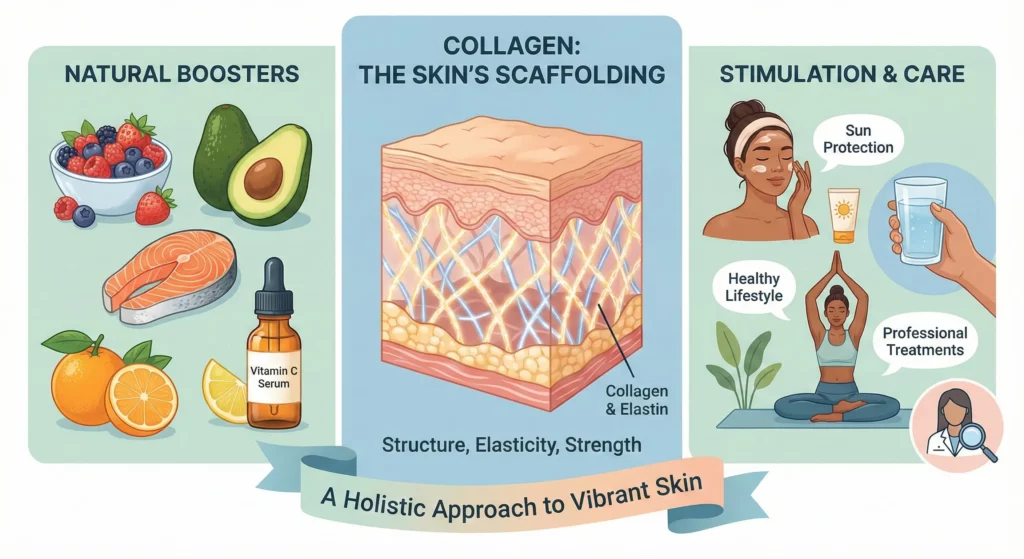
Collagen is a crucial protein found in the skin, providing structure, elasticity, and strength. It acts as a building block, supporting various connective tissues throughout the body. In the context of skin health, collagen is like the scaffolding that maintains its firmness and youthful appearance.
The importance of collagen for skin health cannot be overstated. As the body ages, collagen production naturally declines, leading to common signs of aging such as wrinkles, fine lines, and sagging skin. External factors like sun exposure and unhealthy lifestyle habits further accelerate this process, emphasizing the need to actively stimulate collagen production.
Stimulating collagen production is significant for several reasons. First and foremost, it helps in maintaining skin elasticity, preventing the formation of wrinkles and ensuring a more youthful complexion. Collagen also plays a role in wound healing, contributing to the repair of damaged skin. Moreover, it supports skin hydration, promoting a healthy and radiant glow.
Understanding the significance of collagen production is a proactive approach to skincare. It involves adopting practices that boost collagen synthesis, ranging from dietary choices rich in collagen-boosting nutrients to skincare routines incorporating products with collagen-stimulating ingredients like vitamin C and retinoids. Lifestyle adjustments, including quitting smoking and managing stress, contribute to the overall strategy of preserving and enhancing collagen levels in the skin.
In essence, the journey to healthy and vibrant skin starts with a comprehensive understanding of collagen, its pivotal role in skin health, and the importance of actively stimulating its production to counteract the inevitable effects of aging and environmental stressors.
Collagen Production Process
Collagen production is a complex process vital for maintaining skin health, and understanding its nuances unveils key insights into effective skincare.
Role of Fibroblasts in Collagen Synthesis
Fibroblasts, the unsung heroes of collagen synthesis, are specialized cells responsible for producing this crucial protein. Found in the dermis, fibroblasts play a pivotal role in maintaining skin structure and elasticity. These cells respond to signals, initiating the production of collagen fibers that contribute to the skin’s firmness and resilience. The activity of fibroblasts is fundamental in ensuring a well-supported and youthful skin matrix.
Factors Influencing Collagen Production
Aging:
As the chronological clock ticks, the natural aging process brings about a decline in collagen production. This decline is multifaceted, involving both a decrease in the number of fibroblasts and a slowdown in their collagen-synthesizing activity. Consequently, the skin loses its firmness and is more prone to wrinkles and sagging.
Sun Exposure:
Prolonged exposure to ultraviolet (UV) rays from the sun is a significant factor affecting collagen production. UV radiation accelerates collagen breakdown, leading to a reduction in collagen levels. This not only contributes to premature aging but also compromises the skin’s ability to repair and regenerate.
Lifestyle Habits:
Everyday choices and habits play a crucial role in influencing collagen production. Unhealthy lifestyle practices such as smoking and excessive alcohol consumption have been linked to collagen degradation. Smoking, in particular, reduces blood flow to the skin, depriving it of essential nutrients and hindering collagen synthesis.
Understanding these factors underscores the importance of adopting a holistic approach to skincare. Implementing habits that support fibroblast activity and counteract the negative effects of aging and external factors is key. Protective measures like sunscreen use, a healthy diet rich in collagen-boosting nutrients, and avoiding harmful habits contribute to preserving collagen levels and promoting skin vitality.
In essence, comprehending the intricate dance between fibroblasts and the factors influencing collagen production empowers individuals to make informed choices in their skincare routines and lifestyle, fostering skin that radiates health and resilience.
Collagen, the key structural protein in the skin, can be naturally boosted through a well-balanced diet rich in essential nutrients and specific collagen-friendly foods.
Nutrients Essential for Collagen Synthesis
Vitamin C:
An indispensable nutrient, vitamin C is a powerful antioxidant that stimulates collagen production. Found abundantly in citrus fruits, strawberries, and bell peppers, vitamin C plays a crucial role in the formation of collagen fibers.
Proline:
An amino acid essential for collagen formation, proline is found in abundance in dairy products, eggs, and wheat germ. It contributes to the stability and structure of collagen, supporting its synthesis.
Glycine:
Another amino acid, glycine, is a building block of collagen. Foods like bone broth, chicken skin, and pork skin are excellent sources of glycine, promoting collagen synthesis and skin elasticity.
Copper:
Copper is a trace mineral that participates in the cross-linking of collagen, enhancing its strength. Foods such as organ meats, nuts, and seeds contain copper, contributing to collagen’s overall structural integrity.
B. Collagen-Rich Foods
Bone Broth:
A collagen powerhouse, bone broth is rich in amino acids, including proline and glycine. Simmering bones releases collagen and other beneficial compounds, making bone broth a nourishing choice for supporting skin health.
Fish and Seafood:
Fish and seafood are excellent sources of collagen and omega-3 fatty acids, which promote collagen synthesis. Consuming fatty fish like salmon, mackerel, and tuna supports skin elasticity and hydration.
Berries and Citrus Fruits:
Berries, such as strawberries, blueberries, and raspberries, are packed with vitamin C, a vital nutrient for collagen production. Citrus fruits like oranges and lemons also contribute to collagen synthesis, providing a refreshing and nutritious boost.
Incorporating these collagen-boosting foods into your diet can positively impact skin health. Whether enjoying a cup of bone broth, savoring a seafood dish, or indulging in a colorful fruit salad, these nutrient-rich choices support the body’s collagen synthesis process, contributing to vibrant and resilient skin.
Remember, a holistic approach that combines a collagen-rich diet with proper skincare and lifestyle habits can maximize the benefits for your skin.
Professional Treatments
Dermatological procedures are medical interventions performed by dermatologists to address various skin concerns. These can include treatments for acne, pigmentation, wrinkles, and overall skin rejuvenation. Dermatological procedures often utilize advanced technologies and medical-grade products to achieve optimal results.
Microneedling and its Collagen-Inducing Effects:
Microneedling is a minimally invasive procedure that involves creating tiny, controlled injuries in the skin using fine needles. This process stimulates the skin’s natural healing response, promoting collagen and elastin production. Microneedling is effective in reducing fine lines, wrinkles, and improving overall skin texture.
Laser Therapies for Collagen Stimulation:
Laser therapies use concentrated beams of light to target specific skin concerns. Some lasers are designed to stimulate collagen production by penetrating the deeper layers of the skin. This collagen induction helps improve skin elasticity, reduce wrinkles, and even out skin tone. Laser therapies are customizable, making them suitable for various skin types and concerns.
Neotonic – a 100% Natural Formula to Support Collagen Production:
Neotonic is an innovative skincare product formulated with 100% natural ingredients aimed at supporting collagen production. This product combines potent botanical extracts known for their collagen-boosting properties. Neotonic is designed to nourish the skin from within, providing essential nutrients that contribute to the synthesis of collagen, promoting skin firmness and vitality.
Professional treatments offer effective solutions for individuals seeking targeted and advanced skincare interventions. Whether through dermatological procedures, microneedling, laser therapies, or specialized products like Neotonic, these approaches contribute to enhanced collagen production, resulting in healthier and more youthful-looking skin.
[Learn More about Neotonic]
It’s essential to consult with a qualified dermatologist or skincare professional before undergoing any professional treatments to ensure personalized recommendations based on individual skin needs.
Myths and Facts about Collagen
Common Misconceptions
Myth: Collagen Supplements Fully Replace Lost Collagen:
Some individuals believe that collagen supplements can completely replace lost collagen in the skin. However, while these supplements can support collagen production, they may not fully replace the collagen that naturally diminishes with age.
Myth: Collagen Skincare Products Can Penetrate the Skin and Boost Collagen:
There’s a misconception that collagen molecules in skincare products can penetrate the skin and directly boost collagen levels. In reality, collagen molecules are often too large to penetrate the skin deeply.
Myth: More Collagen Equals Plumper Skin:
Another common myth is that the more collagen, the plumper the skin. In truth, collagen needs to be balanced with other factors like hydration and elastin for optimal skin health.
Evidence-Based Facts
Fact: Collagen Production Declines with Age:
Scientific evidence confirms that collagen production naturally decreases with age. This decline contributes to wrinkles, sagging skin, and a loss of skin elasticity.
Fact: Certain Foods Promote Collagen Synthesis:
A well-balanced diet rich in vitamin C, amino acids, and antioxidants can support collagen synthesis. Foods like citrus fruits, berries, and fish contribute to maintaining healthy collagen levels.
Fact: Sun Protection Preserves Collagen:
Regular use of sunscreen is crucial to preserving existing collagen. UV rays accelerate collagen breakdown, leading to premature aging.
Fact: Collagen Peptides May Benefit Skin Health:
Studies suggest that collagen peptides, when hydrolyzed into smaller particles, may be more easily absorbed and can potentially benefit skin health. These peptides can stimulate collagen production and improve skin elasticity.
Separating myths from evidence-based facts is essential for making informed decisions about skincare. While collagen supplements and skincare products have their place, a holistic approach that includes a healthy diet, sun protection, and other good skincare practices is key to maintaining optimal collagen levels.
Here is a potential conclusion paragraph for the article:
Conclusion
In conclusion, this article provided a comprehensive overview of collagen and its crucial role in maintaining healthy, youthful skin. It discussed how collagen production naturally declines with age and is also negatively impacted by external factors like sun exposure and lifestyle habits.
The article explored various evidence-backed methods for stimulating collagen production, including adopting a collagen-rich diet, implementing good skincare practices, avoiding harmful habits, and considering professional treatments when needed. While collagen levels diminish over time, making lifestyle changes, protecting skin from UV damage, and properly caring for skin can help preserve collagen and slow down signs of aging.
An anti-aging skincare routine should take a holistic approach that supports collagen synthesis through nutrition, lifestyle modifications, and targeted treatments. With a better understanding of collagen and strategies to boost its production, individuals can take proactive steps to maintain vibrant, resilient skin for years to come.